
Peptide Storage
When you order peptides online, most pure peptides will be delivered in a lipophilized (freeze-dried) powder sealed in a vial, which you’ll need to reconstitute yourself with bacteriostatic water — water combined with 0.9% benzyl alcohol.
The reason peptides are delivered in this lipholyzed format is to maintain their stability and potency.
Some peptide products may already come pre-mixed in stabilized formats such as tablets or nasal sprays (like those from Stem Code), while others — such as some copper peptides — can be formulated into topical serums that don’t require reconstitution. Whatever format you buy, it’s important you know how to store your peptides correctly to keep them potent and safe.
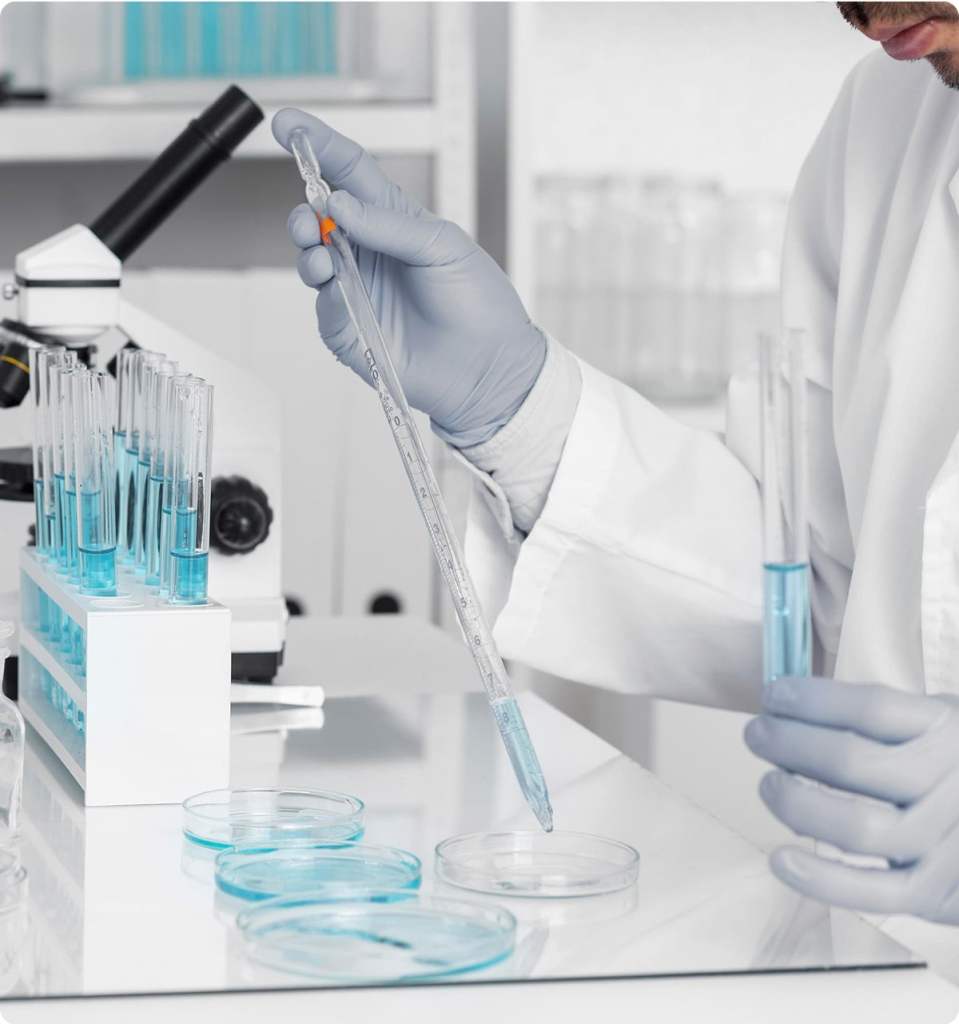
Freeze-Dried vs. Reconstituted Peptides
Freeze-dried (lyophilized) peptides come as a light, powder-like substance in sealed vials. This form is incredibly stable because nearly all moisture has been removed, which helps prevent degradation during shipping and storage.
Once you mix the peptide with bacteriostatic water (or sterile saline), it becomes a reconstituted solution. This solution is now far more delicate, as water can accelerate peptide breakdown if it’s not stored properly.
Freeze-dried and reconstituted peptides should be kept in an airtight container, away from sunlight, and in some cases, stored in the fridge (temperature 3-8°C). The main difference is the shelf life.
Lyophilized peptides can be stored for 12-24 months, while a reconstituted peptide has a shelf life of 28 days.
What Temperature Should Peptides Be Stored At?
For most research-grade peptides:
- Before reconstitution: Store in a refrigerator (2–8 °C) or a freezer (-20 °C) for long-term storage.
- After reconstitution, keep refrigerated and avoid freezing, as ice crystals can damage peptide chains.
Peptides that arrive pre-formulated in stabilized solutions (like GHK-Cu serums or nasal sprays) are typically formulated to resist degradation at room temperature, but still follow the label instructions, as some still benefit from being stored in cooler conditions.
The Best Way to Store Peptides (All Types)
Regardless of the format, follow these general best practices when handling your peptides:
- Keep them cold: Refrigeration is your best friend for preserving peptide stability.
- Avoid repeated temperature changes: Don’t take peptides in and out of the fridge unnecessarily. These drastic temperature changes can cause condensation and degradation.
- Keep them dry: Moisture is the enemy of freeze-dried peptides. Don’t open vials until you’re ready to mix.
- Avoid exposure to light: UV light can degrade peptides quickly. Store them in a dark area or amber vials.
- Label everything: Once mixed, note the date and volume of bacteriostatic water used.
Peptide Containers — What’s Best?
Most peptides are supplied in sealed glass vials, and this is the best way to keep the compounds protected. For extra caution:
- Use airtight containers or zip-seal bags with desiccants to reduce humidity.
- Keep them away from metallic surfaces, as some compounds can bind or degrade on contact with certain metals.
- For travel or short-term handling, use insulated pouches with ice packs to maintain temperature stability.
What Not To Do With Peptide Storage
One of the most common errors is using regular tap water or distilled water to reconstitute peptides. While this might seem harmless, these types of water can introduce bacteria or other microorganisms into the peptide vial because they lack a preservative.
Once the vial is punctured, the environment is no longer sterile, and even a small amount of contamination can compromise the entire solution.
That’s why bacteriostatic water — which contains 0.9% benzyl alcohol — is the preferred option.
Benzyl alcohol acts as a mild preservative, preventing bacterial growth in the vial and extending the stability of the peptide solution for up to 28 days when refrigerated.
In addition to avoiding the wrong type of water, peptides should never be stored in humid environments like bathrooms, as moisture accelerates degradation. Avoid freezing reconstituted solutions, since ice crystal formation can damage the delicate peptide chains.
Another thing to note is not to shake the vial vigorously, as agitation can cause the peptide bonds to break apart. Instead, gently roll the vial between your fingers to evenly mix the solution.
Most importantly, maintain strict sterility with tools and the environment throughout handling. And never reuse syringes, needles, or mixing tools, and avoid touching the inside surfaces of the vial.